End-to-end redesign of the global client onboarding experience for Wallester fintech platform. The previous onboarding flow was complex, confusing and compliance-heavy. The goal was to simplify the process, improve usability, and reduce drop-offs, while creating scalable design patterns that work across web and mobile.
Sector
Fintech, B2B/B2C
Project team
PM, Engineers, QA
Role
Lead product designer
Timeline
Dec 2025 - Feb 2026
The problem
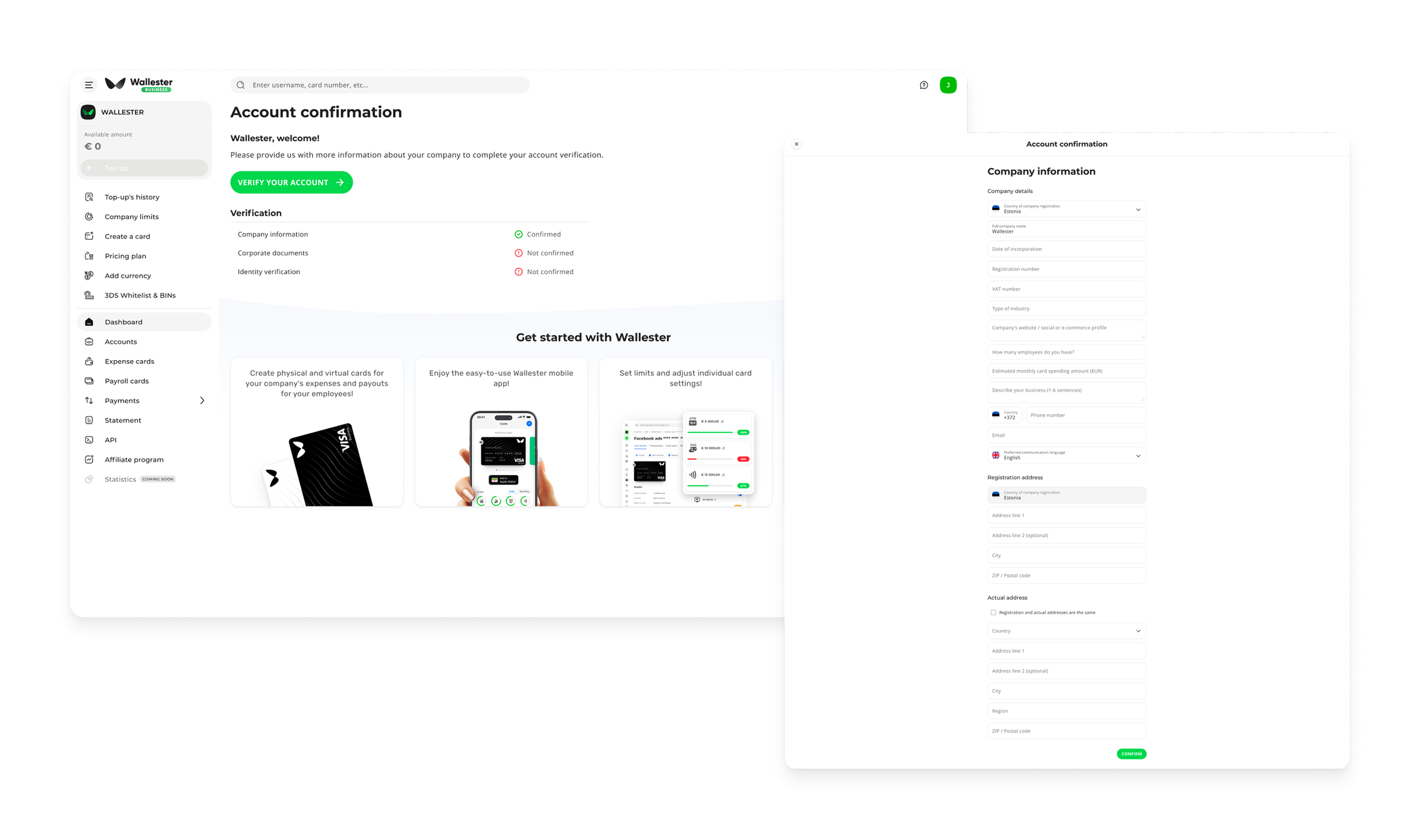
Onboarding process was complex, compliance-heavy, and intimidating. It contained long AML and compliance forms, dense text, and no progress visibility.
Drop-off rate during onboarding was approximately 42% — particularly during AML-related steps.
Additionally:
If users left mid-process, progress wasn’t saved.
Support received frequent tickets related to confusion and document submission.
Users described onboarding as ‘stressful’ and ‘bureaucratic.
Research & Insights
We conducted:
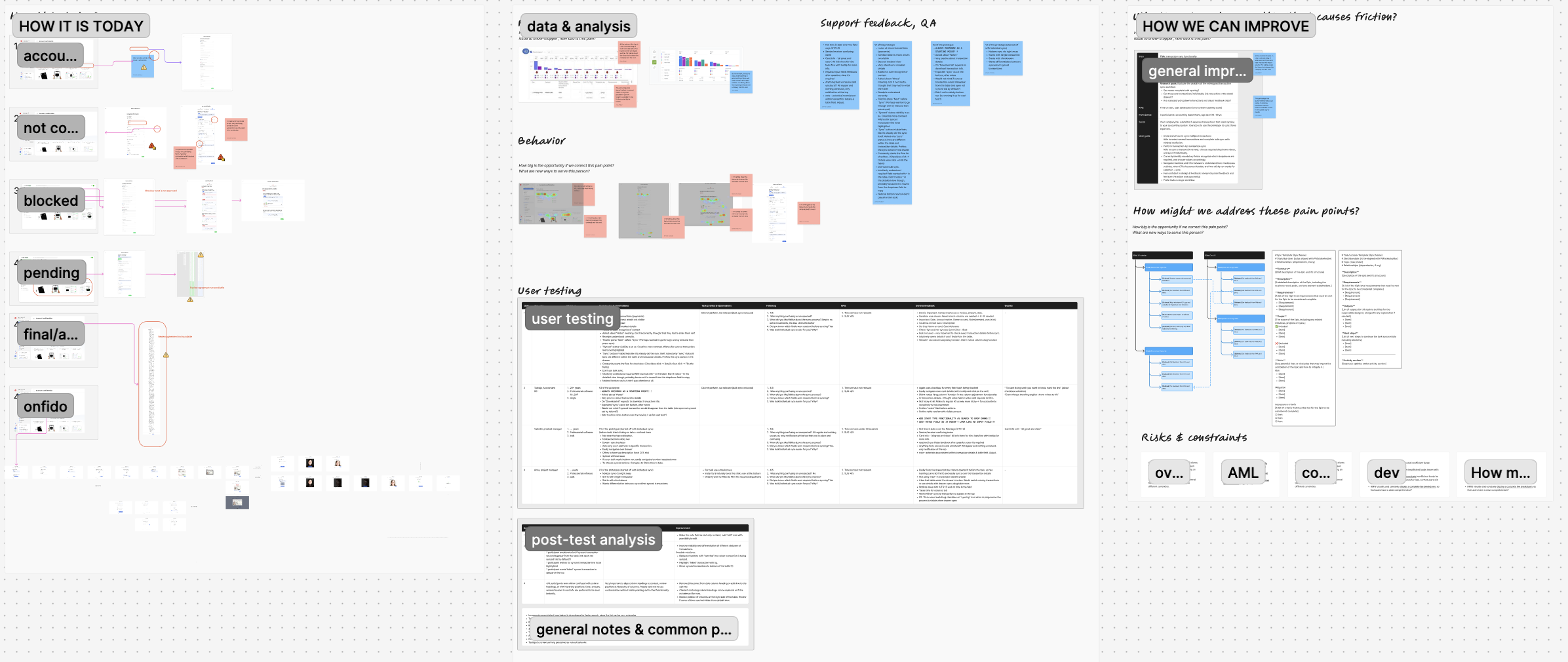
Funnel analysis to identify exact drop-off points
User interviews with users who abandoned onboarding
Sessions with compliance & AML teams to understand regulatory constraints
Benchmarking against modern fintech onboarding experiences
Takeaways:
Users felt overwhelmed by large blocks of compliance questions.
The language felt legal and intimidating.
Lack of progress saving reduced motivation.
No sense of progress or accomplishment.
Users needed guidance, not interrogation.
Strategy and key improvements
We reframed onboarding from “form filling” to “guided setup.”
Step-by-step guided flow
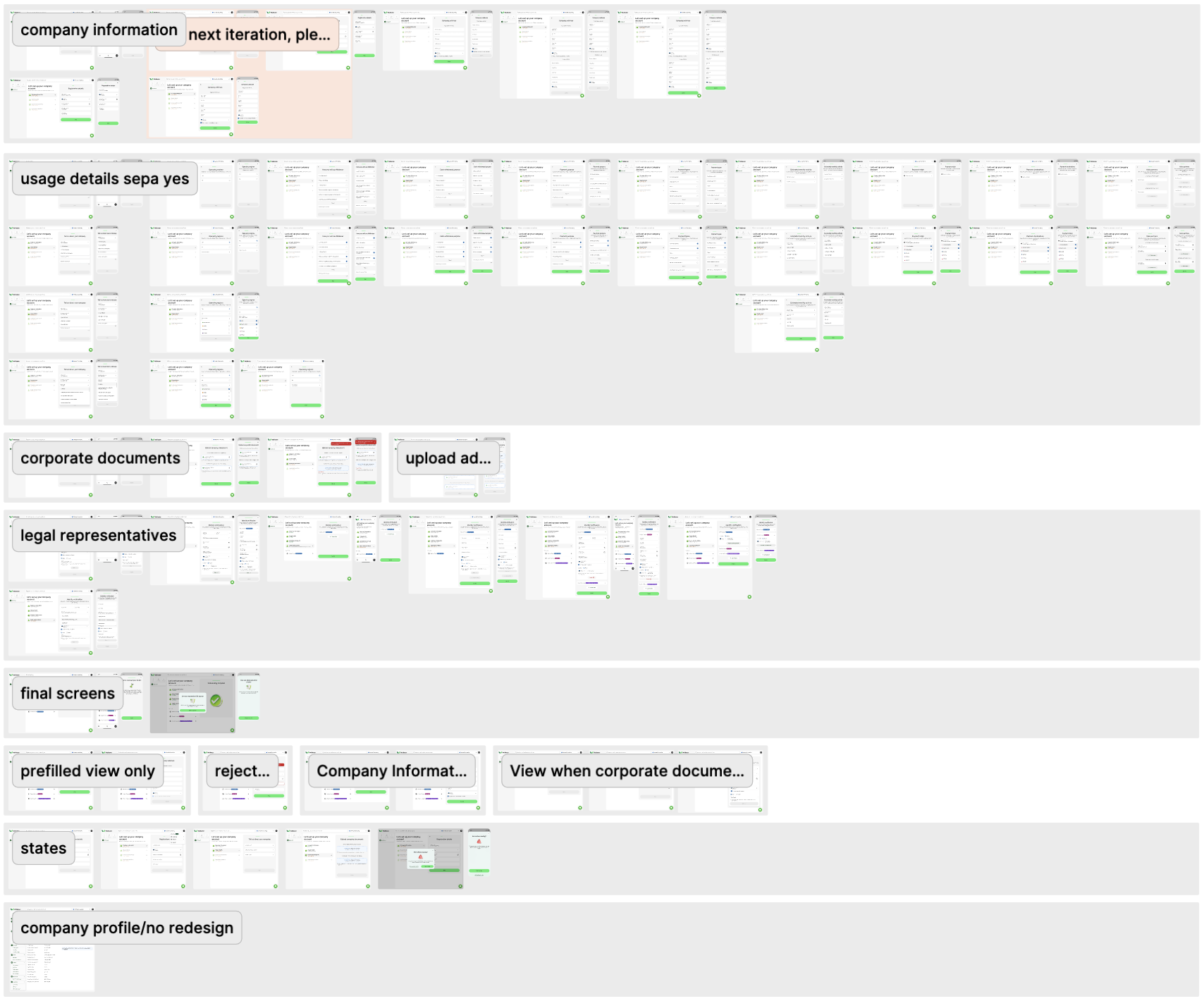
We introduced a clear step structure with visible progress indicators.
Users always knew where they were and what remained.
Progress became measurable and encouraging.
Flexible completion & final confirmation
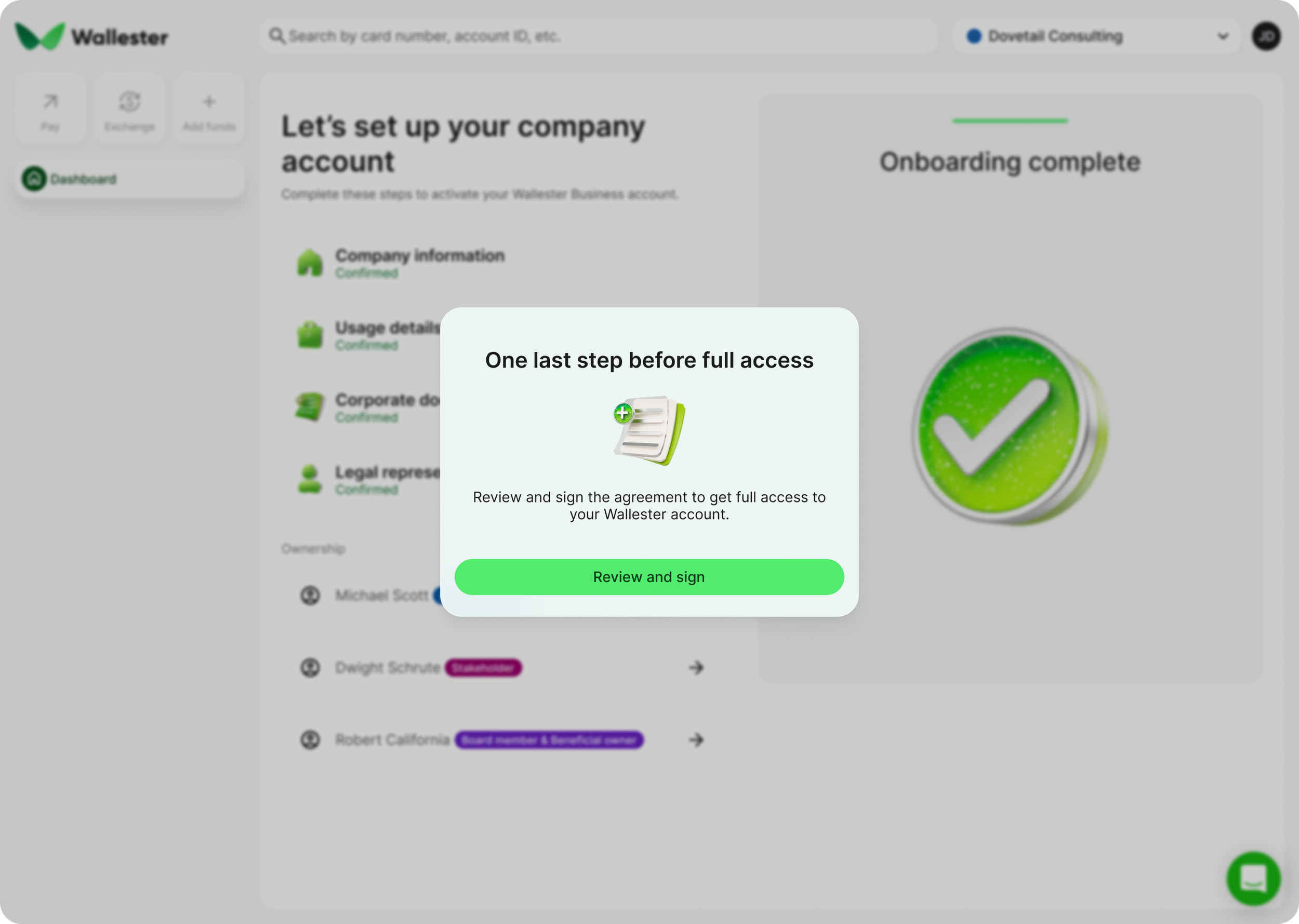
Users can safely leave the process and return at any time without losing progress.
Before final activation, we introduced a clear “one last step” review screen, allowing users to confidently review and sign the agreement before gaining full access.
Psychological engagement
Without gamifying the process, we made it feel lighter:
Micro-confirmations after completed steps
Smaller grouped sections to reduce perceived effort
Clear progression markers to build momentum
The experience shifted from “heavy form” to “guided completion.”
Structured AML & compliance questions
Instead of long open text fields:
Complex inputs were converted into structured selections
Related questions were grouped logically
Plain language explanations replaced legal-heavy copy
Contextual tooltips clarified why specific data was required
Compliance remained intact but the experience became clearer.
After implementation:
Onboarding completion rate increased from 58% to 76%
Drop-offs during AML steps reduced by ~35%
Support tickets related to onboarding dropped by 28%
Time-to-complete onboarding reduced by 22%
Most importantly that in follow-up interviews, users reported:
Higher trust in the product
Better understanding of why compliance data was required
Feeling more confident completing the process
Trust is everything in fintech — and this was a major shift.
Results
Scalability Impact
Beyond user experience, this redesign improved system scalability.
Previously, adding new compliance requirements required heavy redesign work.
With the new modular structure:
Compliance fields can be added without restructuring flows
Conditional logic supports dynamic step branching
Components are reusable across products
Localization became simpler and more predictable
The solution improved not only conversion — but long-term adaptability.